More effective learning and training
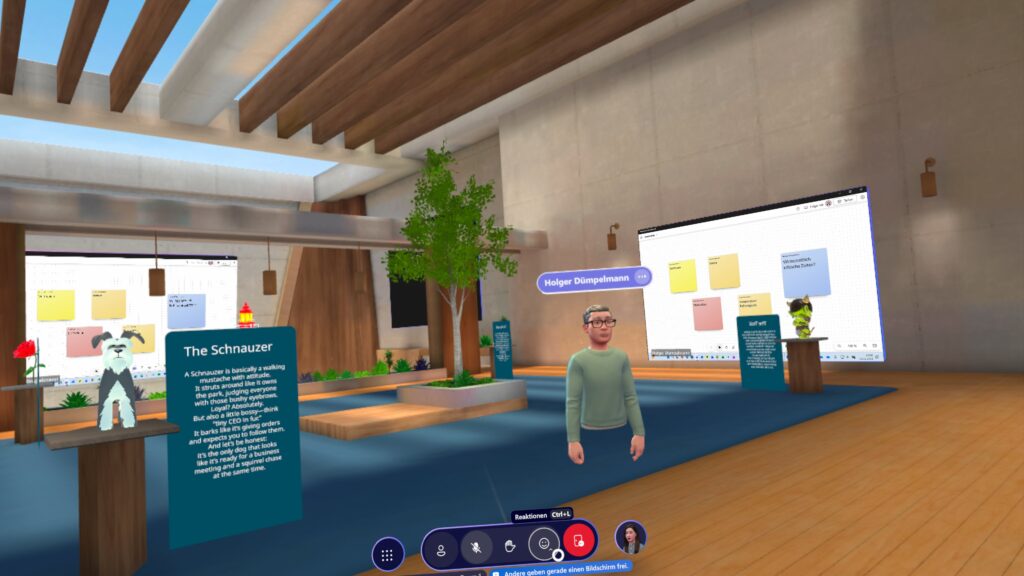
In the digital workplace, learning and training are increasingly about exploring new formats in a simple and accessible way in order to realistically assess their impact and acceptance.
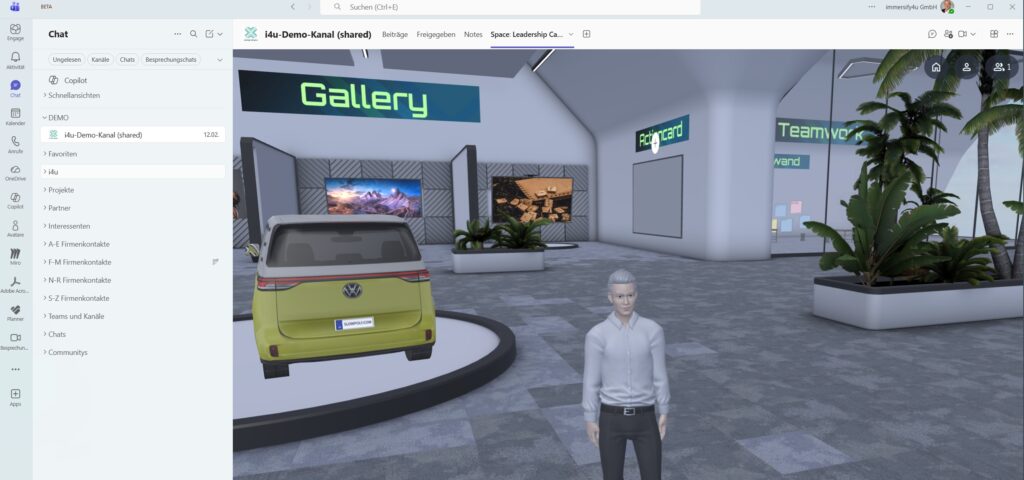
Experiential learning formats are particularly well suited for exploring both hard and soft skills training in the context of everyday work — integrated into the digital workplace and close to people’s daily routines. Hard als auch Soft Skill Trainings im Arbeitskontext auszuprobieren – integriert in den digitalen Arbeitsplatz und nah am Alltag der Menschen.
The goal is not to replace existing training or academy solutions, but to explore new formats without significant financial investment in order to understand whether they support everyday work and are adopted — without requiring an early investment or purchase decision.
The principle applies here as well: screen first, headset optional. This keeps learning and training formats accessible and scalable for everyone, while allowing content to deepen where shared experiences clearly enhance learning outcomes.
Typical Use Cases
Initial exploration of hard skills training: presenting processes, workflows, or technical topics in a clear and practical way
Soft skills training and enablement formats: experiencing communication, leadership, and collaboration together
Onboarding in the digital workplace: helping new employees orient themselves, connect, and experience the culture
Pilot and test formats: exploring new learning approaches without changing existing training environments
Goals / ROI / Benefits
Low-barrier entry into new learning and training formats without replacing existing specialized solutions
Better decision-making on whether and where immersive learning formats should be developed further
Improved learning outcomes in early use cases, because content is not just consumed but experienced
Low organizational and investment effort, while maintaining high reach and reusability
HR, learning, and academy leaders use these formats to pragmatically explore learning in the digital workplace — serving as a gateway to more advanced solutions once demand, acceptance, and suitability are clear.